

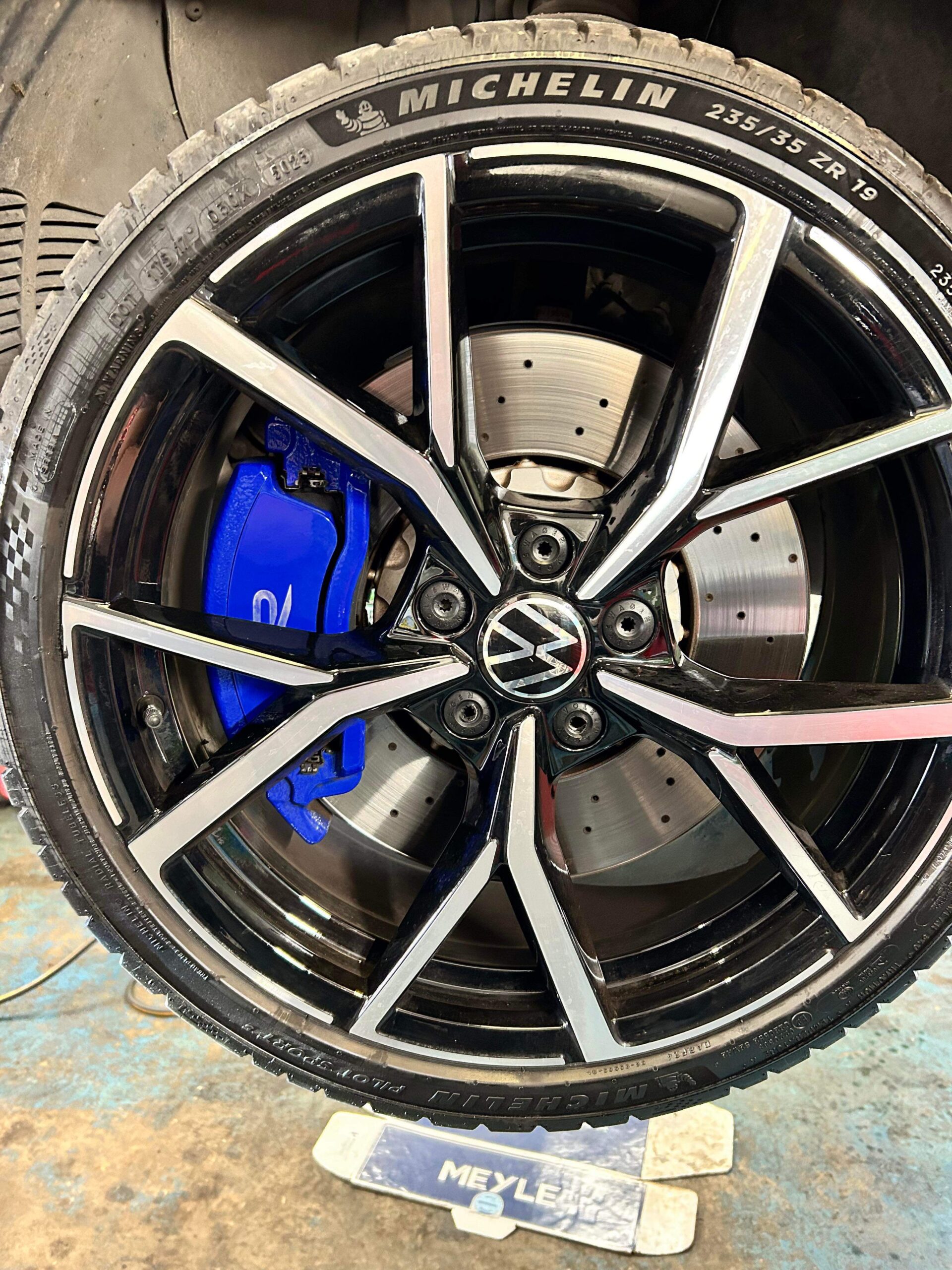
Dastechnik winter car care series · Guide 3 of 10
Winter tyre checks help you spot wear, damage and incorrect pressures before rain, frost or a heavily loaded journey increases the demands on your car. Around Weston-super-Mare and North Somerset, wet roads can be as important as occasional snow. This guide separates the legal tread minimum from sensible condition checks and explains when to ask for professional advice.
The quick answer
Inspect every tyre for damage and uneven wear, measure tread in several places, and check cold pressures against the vehicle’s stated figures. The legal minimum for car tyres is 1.6 mm across the central three-quarters and around the entire circumference.
Practical advice for winter driving
Measure tread and inspect the whole tyre
A single measurement can miss uneven wear. Use a suitable gauge at several points and examine accessible sidewalls for cuts, bulges or cracking. The 1.6 mm legal minimum is a limit, not a promise of strong wet-weather performance. If tread is approaching the limit, plan replacement rather than leaving it until the next MOT. Do not drive on a damaged tyre while waiting for a routine appointment; get advice on safe assistance.
Use the pressure for your car and its load
Pressure figures are usually on a vehicle label or in the handbook. Front and rear pressures can differ, and a fully loaded Christmas trip may need a different setting. Check before driving while the tyres are cold, and include the spare if fitted. Do not inflate to the maximum number moulded on a tyre sidewall as though it were the vehicle’s normal recommendation. A tyre-pressure warning should prompt a proper inspection, not only a dashboard reset.
Choose tyres for use, not just a season label
Winter and all-season tyres can suit different patterns of driving, but suitability depends on the vehicle, tyre specification and routes. Keep the correct size, load and speed ratings, and ask a tyre professional about a consistent set. Four-wheel drive does not remove the need for grip when braking. During servicing at Dastechnik, discuss uneven tyre wear and any steering pull, vibration or suspension symptoms so the underlying cause is considered.
Your practical checklist
- Measure tread in more than one place.
- Inspect for bulges, cuts and uneven wear.
- Check cold pressures for the intended load.
- Investigate repeated pressure loss.
- Check the spare or the expiry and condition of the repair kit.
Frequently asked questions
What is the legal tyre tread depth for a car?
At least 1.6 mm across the central three-quarters of the tread and around the whole circumference.
Should I check pressures when tyres are cold?
Yes. Use the vehicle manufacturer’s cold-pressure figures and the correct load setting.
Can I ignore a tyre-pressure warning after resetting it?
No. Check pressure and condition, and investigate a recurring warning or loss.
Does four-wheel drive prevent slipping?
No. Available tyre grip and road conditions still determine braking and control.
Why is one tyre wearing unevenly?
Pressure, alignment, suspension wear or other faults may contribute. Arrange an assessment rather than assuming one cause.
Continue your winter preparation
Read our previous guide: Car Battery Problems in Winter: Signs, Checks and Next Steps. For an overview, start with our winterising your car guide. Find more Dastechnik maintenance guides.
Get winter-ready with Mark and the Mechanics
Bring your questions and symptoms to Mark and the Mechanics at Dastechnik Auto Centre Workshop in Weston-super-Mare, North Somerset. Mark’s motor industry experience began in 1998. Discuss servicing, diagnostics and repairs that suit your vehicle, with mobile visits by arrangement for appropriate work.
Make the next journey a better-prepared one. Call 07596 350369 or send a service enquiry. Tell us your registration, mileage and the issue you want checked so we can discuss the next step.
Mark and the Mechanics · Dastechnik · Local experience. Practical vehicle care.
Further reading and guidance
Consult your vehicle handbook first. For general guidance, see GOV.UK vehicle and driving guidance. This guide describes checks and warning signs; a specific fault needs assessment of the vehicle.
Comments are closed